Taste the Results
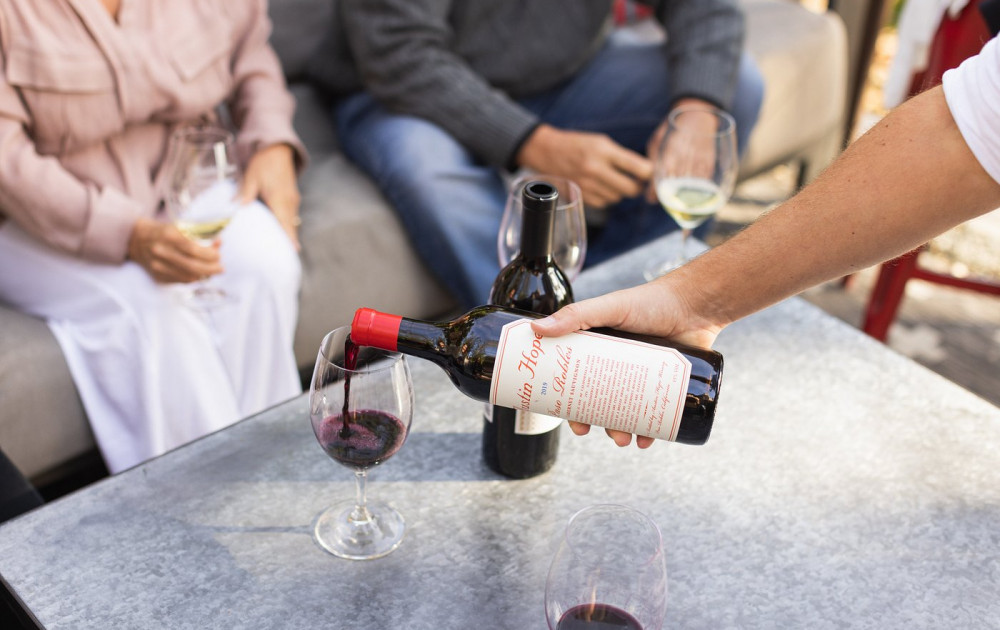
In early spring at Hope Family Wines, a grower sits down with Stasi Seay, Director of Vineyards and Grower Relations, to taste a young Cabernet made from their vineyard.
In the glass is a year of farming decisions translated into wine. For many growers, it’s the only opportunity to experience what their fruit ultimately became.
At Hope Family Wines, these tastings are a cornerstone of partnership.
Founder Austin Hope grew up surrounded by the vineyards and farming families of the Central Coast. That upbringing shaped his belief that great wine is built on long-term relationships grounded in trust, transparency, and shared purpose. Today, his winery works with nearly 50 growers each year, and that relationship-first philosophy guides every collaboration.
Stasi leads that effort, which has been making waves recently. In 2024, Hope Family Wines announced that more than 99.9 percent of its fruit supply now comes from sustainably grown vineyard blocks—the culmination of a four-year effort initiated by Hope and Seay. The winery’s original estate vineyard was SIP Certified in 2011 and began adopting regenerative organic practices in 2025. Also last year, Hope Family Wines acquired Tufera Farms, a 328-acre SIP Certified vineyard and truffle farm that Seay also oversees.
Grower relations is one of Stasi’s professional passions—it paves the way for better wines that are better for the environment. Because grapes are transformed through fermentation, growers don’t always see how their farming choices influence the final wine. To close that gap, Stasi meets privately with each grower to taste the wine and discuss their practices.
“Irrigation is always the first thing we talk about,” Stasi says. “Overwatering is the number one thing that can diminish wine quality while wasting a precious resource.” Even among SIP Certified growers who carefully monitor water use, tasting the results can spark thoughtful refinements. They also review shoot thinning and fertilization timing; small adjustments can significantly influence balance, structure, and flavor.
These growers don’t aim for average. They want to grow exceptional fruit. Many now look forward to these annual meetings and use the feedback to strengthen their farming plans.
For Stasi, the process is personal. With more than 30 years in the industry, including time as a grower herself, she knows how rare this level of feedback can be. In her own farming career, she only tasted wine made from her grapes a handful of times. That experience shaped her belief that communication between the vineyard and winery is one of the most powerful tools for improvement.
Great wine is not made alone; it is crafted together.